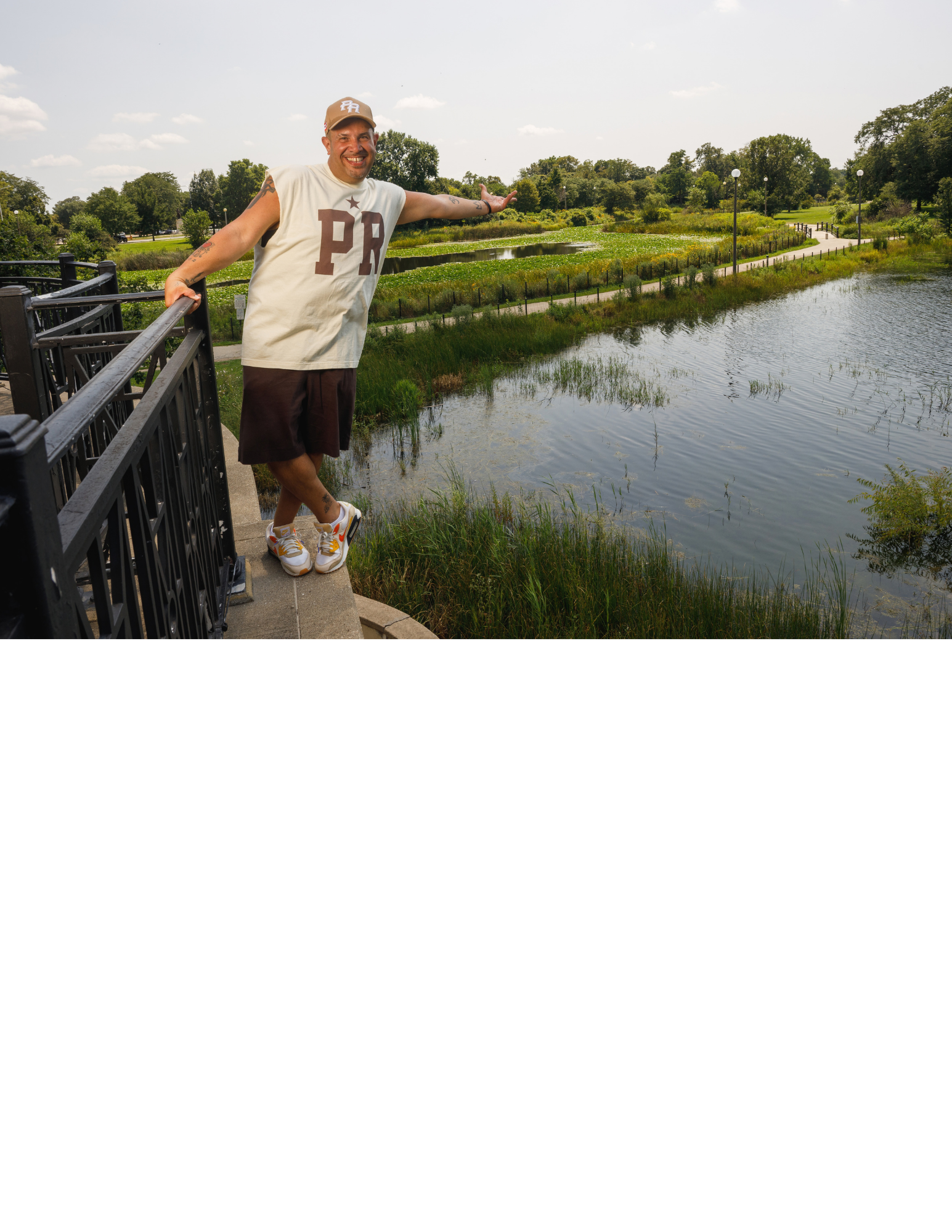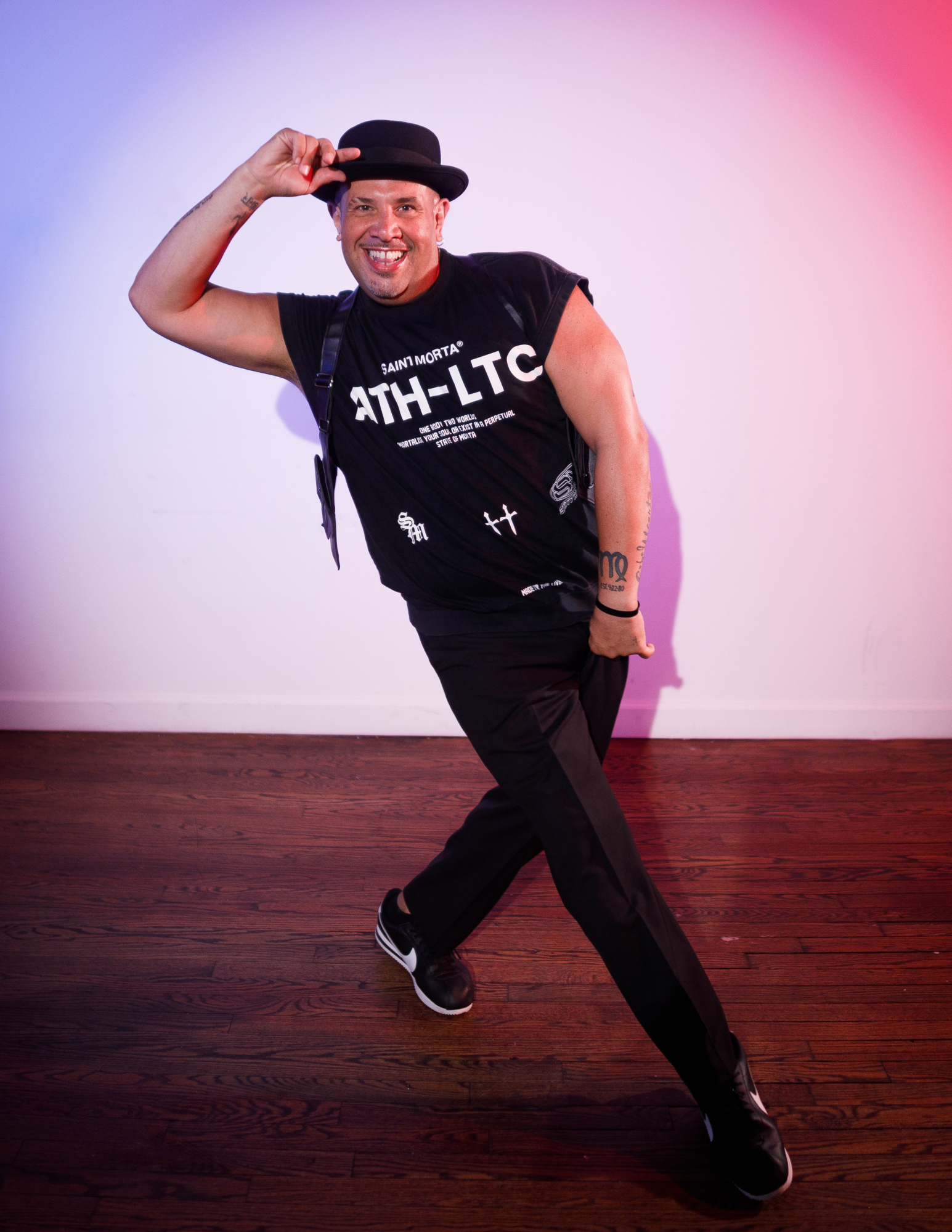
From the block to the big stage with Lyrik Cruz.
Photos by M. Lamourt
Story by Tanya Bermudez
From Humboldt Park to Hollywood, Lyrik Cruz has spent his life turning movement into possibility — and now he’s coming home to preserve the dance history that helped him become who he is.
“Five, six, seven, eight.”With effortless precision, Lyrik Cruz demonstrates the steps from the Emmy-winning Bad Bunny Super Bowl halftime show.Some dancers catch on quickly. Others hesitate, trying to get every move just right.I’m sitting toward the back of La Bodega dance studio in Brighton Park, doing my best to follow along as Cruz leads a master class. It’s a preview of what keeping up with Lyrik is like in real life: He’s always a few fantastical steps ahead.He runs through the choreography again as latecomers join the class. I can tell who has more experience by how quickly they catch on.Cruz demonstrates the sequence once more, this time slowing it down before counting everyone in: Five, six, seven, eight.He’s an astute observer, quick to spot hesitation and redirect the class to focus on the movement.Ding!“Feel my fantasy,” he says, gliding through the next sequence.“I want you to think about the quality of your movement.”He’s direct and present, encouraging without holding back.“Stop fighting the fuck-up. You’re not going to walk out understanding everything all at once.”The words land. I, too, need the reminder that I can’t do everything all at once.Summer has barely started, and my looming deadlines are already on the horizon. But I shift my focus back to the moment, thinking about how, just an hour earlier, I was riding the 52 Kedzie bus south toward Brighton Park, on my way to see how Cruz built a career that has taken him across stages around the country.From boutique dance studios like La Bodega to one of the most-watched live television performances in the world, Chicago’s Puerto Rican community has been represented.Cruz is proud to have grown up on Crystal and Kedzie. Proud to have built his dance legacy at the Humboldt Park Fieldhouse. Proud to share with the world that Humboldt Park is home.He has helped represent the Puerto Rican community in Barrio Borikén, the neighborhood’s culturally designated Puerto Rican enclave.Very few people outside Chicago know him as Anderson. Even fewer can call him that.For those who grew up with him, though, Lyrik Cruz was once simply Andy, the kid already thinking bigger than the block around him.Childhood friend Blas Ortiz-Venhaus, who now teaches a musical theater program at Walt Disney Magnet School, remembers Cruz as someone operating at a different speed.“[His] mindset on costumes, on dance were always bigger than life. When we learned how to dance it was bland and he always thought of things to elevate. He saw the big picture, the big stage, and the big performance,” Ortiz says.“Lyrik stayed for two years and moved on to Las Semillitas, another community staple. He definitely pushed boundaries on choreography and I watched from the outskirts; I wasn’t as daring as he was. He was a leader in that sense.”At James Russell Lowell Elementary School, the two shared a teacher, Ms. Carmen Rivera, who became one of their first mentors and helped lay the foundation for their understanding of music.Rivera stands on a chair in her classroom to retrieve a framed photograph. It’s their graduating class of 1994, the school’s centennial year. She helps me spot Cruz in the picture.“He was vibrant,” Rivera says with a smile. “Very outgoing, was determined in the way he carried himself. Born to entertain and determined to make it.”We tour the school, quiet during the summer break, before reaching the balcony overlooking the auditorium. The stage stretches beneath towering ceilings, and our conversation echoes through the space.“He was born to bring joy to the world. Nuestro orgullo boricua,” Rivera says.There’s a tenderness in their relationship that reveals something about the people who helped shape Cruz.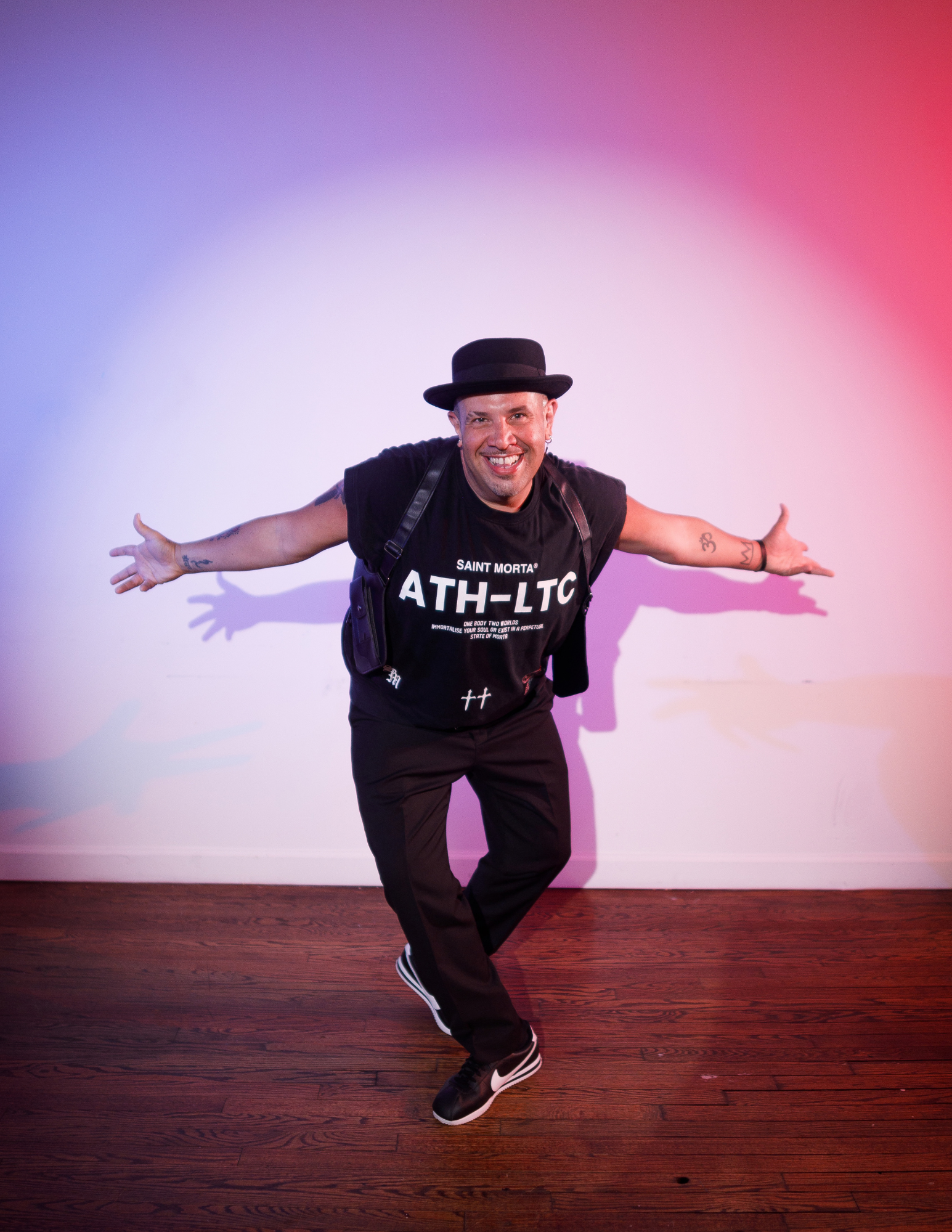
“We as teachers gave him the education and supported his talent, [but] he was determined to make it.”After meeting with Principal Ana Maria Rodriguez, the recipient of the Chicago Public Schools Principal Game Changer Award, I learn more about the staff and programming that make the school special. Rodriguez also recalls Cruz speaking to the graduating class, describing the impact of having someone from their own community show students how far they can go.Cruz grew up amid gang violence in the neighborhood and domestic violence at home. Yet he remained joyful throughout his childhood. As a queer kid growing up in Humboldt Park in the 1990s, he found an outlet in dance and was fortunate to have people like Rivera champion his determination.After our cover photoshoot, Cruz speaks more candidly about his childhood: the deaths of his older brother and father, the way grief affected his family and how addiction became part of that story. He recalls searching for moments of happiness while carrying the weight of loss.Through performance, he found sanctuary.And through spaces like the Humboldt Park Fieldhouse, which housed six dance groups in the early 1990s, he began building a world bigger than the one immediately around him.Salsa, plena, jazz, ballet and hip-hop became the building blocks of his signature style. Leading dance groups and organizing fundraisers helped him develop the résumé, leadership skills and tenacity that would carry him forward.Eventually, through poetry and theater, Andy became Lyrik.Hollywood opened new doors. Choreographing for childhood friend Gina Rodriguez on the set of Jane the Virgin led to other opportunities, including working with Debbie Allen in New York.“I knew that moment would be life changing. It just takes someone to throw your name in the hat,” Cruz says.From Los Angeles, the stages only got bigger.His credits now include choreography for SHINE, an appearance in the Warner Bros. film In the Heights and a featured role in Dance Dreams: Hot Chocolate Nutcracker, a Netflix documentary.For decades, Cruz has moved between worlds: Chicago and New York, New York and Los Angeles, neighborhood dance floors and national stages. He credits California with teaching him how to rest, but he hasn’t slowed down much. This year alone, he has returned to Chicago numerous times.He comes home to visit his mother, but also to organize the Boricua’s Got Talent stage at the Puerto Rican Festival, sharing invaluable insight with emerging artists in Chicago.Now, a new initiative is bringing Cruz back to the dancers who helped shape him. He is working to establish the Chicago Latin Dance Legacy Project, an effort to preserve the history of the dance troupes and directors who paved the way for a community rooted in arts and culture.The dance groups that raised him are fading from collective memory. With Casa Puertorriqueña gone, Cruz sees preservation as the next step in his career: pulling photographs out of closets, bringing packed-away costumes back into view and honoring the directors who spent years nurturing and educating young people.The Chicago Latin Dance Legacy Project will gather that history before it disappears, celebrating the people who built Chicago’s youth dance culture.After organizing a kickback that reunited former dancers decades later, Cruz is working to build on those connections and create a proper archive that could eventually become an exhibition.“This is what it has always been about, what matters, this will help build the next generation.”That quick step has already brought former dancers together from groups including Las Semillitas, Viva La Gente, Fantasía Juvenil, Raíces Tropicales, Las Estrellas, Grupo Taino, Hijos de Borinquen, Los Jóvenes Del Swing, Los Senores Del Swing, La Nueva Era, Arcoiris Musical and Explosion Latina.Leading the effort feels like a natural next move, one that ensures their legacy is celebrated and recognized.The next big thing.“My mother was a director for Grupo Taino and so he reached out to me to help get everyone together, to go on this journey. We were talking about how nobody has any dance groups anymore and this is kind of lost in history and nobody remembers about the stuff we did back of those days keeping people off the streets, teaching them about their culture, so we all played a role.” says Omayra Rodriguez from Grupo Taino.Through the Boricua’s Got Talent stage, Cruz also gives young artists access to a platform where they can be seen, perform and receive invaluable feedback. In doing so, he honors the kind of support Rivera gave him when he was starting out.But the work isn’t easy. When I ask about community politics, Cruz doesn’t hold back. Having witnessed organizational dysfunction and infighting, he is focused on the collaboration needed to move forward.“This work taught me discipline, commitment, taught me how to be a man of my word, and brought me the best years of my life. People at the top collaborate, they don’t compete, so we need to remind the older generation in leadership of their own teachings or we will lose what we have left.”I smile, recognizing the grit it takes to push through community divisions and keep sight of the bigger picture.I put my pen down. Cruz flashes the biggest smile, and we laugh.We wrap up the remaining logistics, and I stay behind, drafting notes and letting the conversation settle.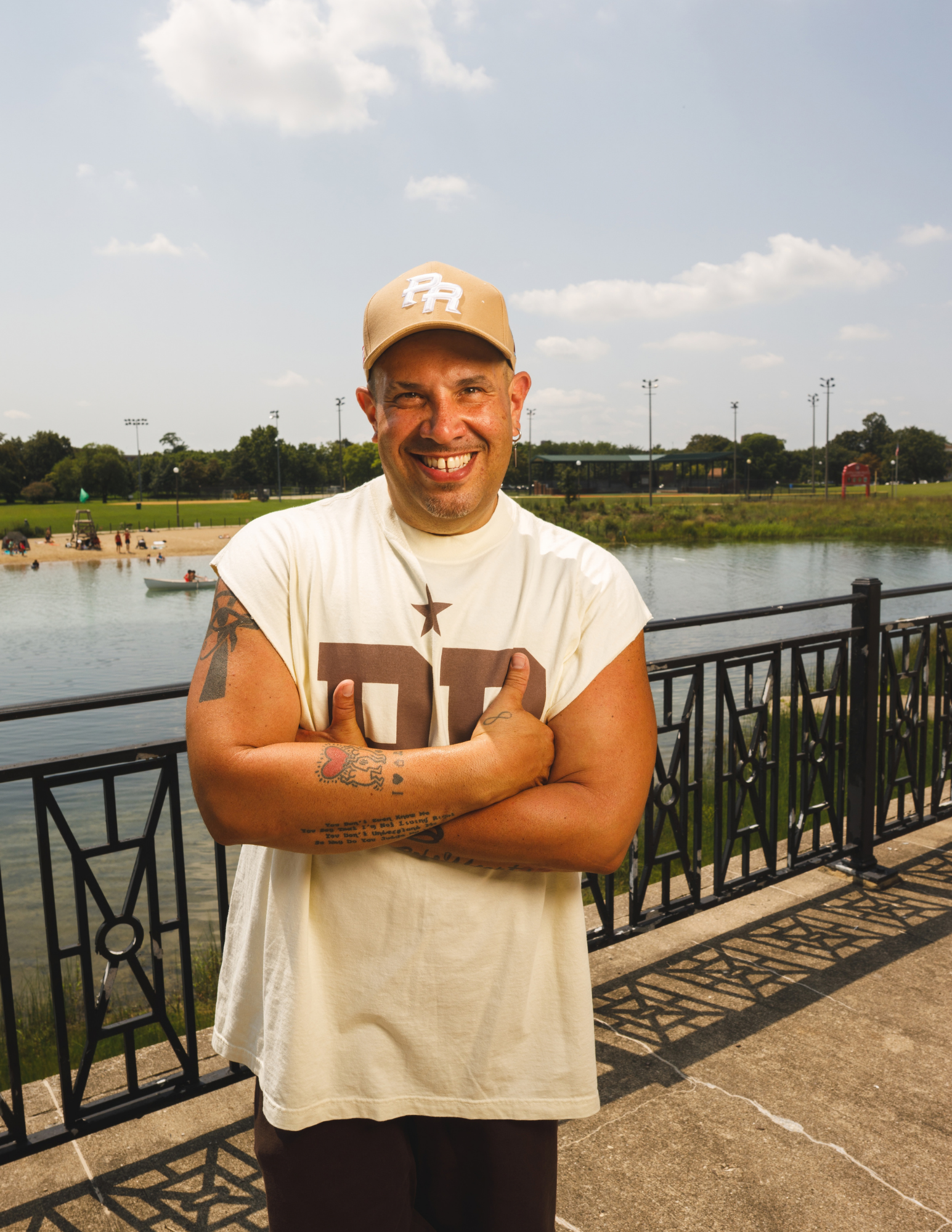
Lyrik Cruz is un orgullo boricua, and our time together leaves me thinking about possibility.
His movement, led by joy.
His character, led by love.
His purpose, led by community.
It’s not a bad place to be, inside his fantasy. It’s fun. It’s happy. It’s special. And I look forward to seeing that fantasy grow.