

en las buenas y en las malas
Every Latino Family Has an Abuela Story. Abuela's Follies Asks What Happens When She Finally Gets to Tell Hers
fotos de: M. Lamourt
palabras de: Tanya Bermudez
En las casas de los latinos, nuestros abuelos son el corazón de nuestras historias más lindas y traumáticas. Pero cuando pasan, todo lo que han vivido inspira preguntas, curiosidad y, últimamente, una oportunidad para sanar. Sería una sanación para vos o una sanación para la ancestría. Pero viene la leyenda de juzgar, de entender y de dar perdón.
Presented by The Vivero as part of A Red Orchid Theatre's Incubator Series, this workshop production introduces audiences to Abuela, a Puerto Rican matriarch who awakens in purgatory. The twist? Purgatory looks exactly like her own kitchen. Given a youthful body reminiscent of a classic cabaret performer, she must stand trial before a mysterious guide to determine whether she has earned her place in heaven. But the final judgment doesn't belong to divine forces alone, it belongs to the audience, whose vote decide her ultimate fate.
It's a Saturday afternoon, a prime Chicago summer day, and I'm walking into the cool, dark theatre space at A Red Orchid Theatre in Old Town. It has the vibe of a well-lived storefront space, with audience seating that's more comfortable than most commercial spaces downtown. Scattered in boxes are props for the show. Contributing photographer M. Lamourt is workshopping the set with the assistance of Everest Chamorro.
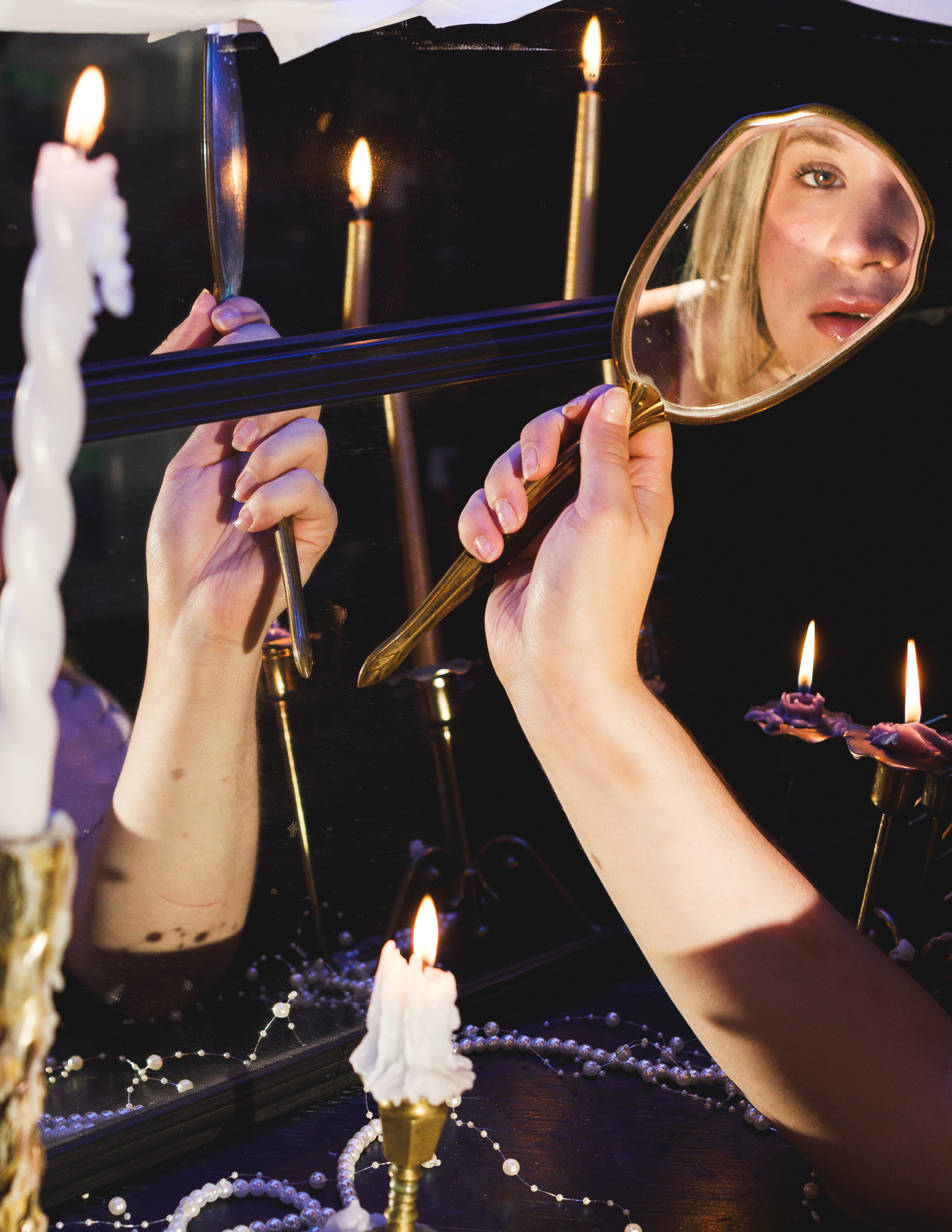
Playwright Kidany Camilo is getting ready in the greenroom. She shares her outfit options, styled by Daniela Martinez, founder of La Mariposa community thrifting. She sits elegantly at the vanity, curling her hair, telling me she won't need long. I tell her we're ready.
She enters the stage, her aura instantly transporting us to a tropical nightclub. Her bronze cocktail dress, her glamour, dazzling in the perfect spotlight. I get a glimpse of what opening night will feel like: sexy, dramatic and with a whole lot of sazón.
"I'm hoping audiences leave with a more open mind about the complexities of Latina women, especially the elders in our families," says Camilo. "I also hope people realize you can love someone who is difficult.
"En las buenas y en las malas. That's the core; that this is for her, with all her good and all her bad, that's what makes her. This play [allows me to] hold both parts of her."
But Camilo doesn't sugarcoat the flaws of Abeula, a character inspired by her real grandmother. Instead, she invites audiences to sit with complexity, with the unnerving moments of desperation. What does redemption mean for someone who spent a lifetime making impossible choices? Does your family conflict stay in the purgatory of no contact? Why does accountability happen only after a strike back, be it verbal or physical? Is that the only resolution?
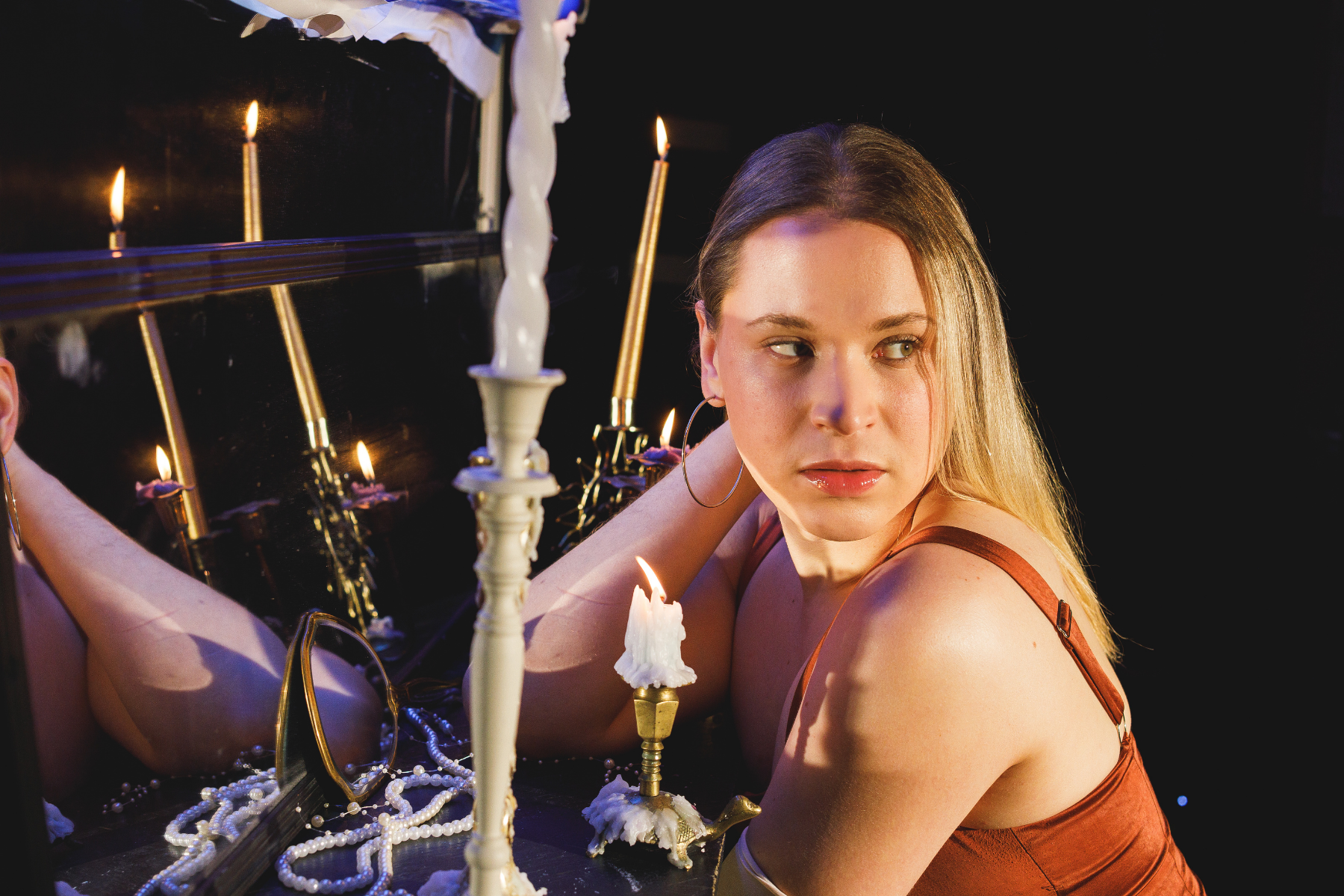
"We live in such a culture [where] if our elders are transphobic, we just settle for that mentality. [Oh!] My existence to you is a problem, but I should just ignore it. Pero when they do something wrong, I'm supposed to take it … [well,] I bite back. That's the one thing I can say about my relationship with my grandma — that I bite back. And that's how she learned. She didn't live an easy life; that's all she's ever known, and she wanted to pass that down to me. She would hit me, and when I became a teen, that's when the table switched," says Camilo.
En la cocina, donde viven las recetas de nuestras raíces, donde los dolores se curan con dulce, donde buscamos la comida que llene la panza y el corazón con una felicidad de ningún otro lugar. Donde empieza, ahí se acaba la fiesta.
"Cooking was her favorite thing," says Camilo. Which is why, when we see Abuela at her lowest point, Camilo takes us to Abuela's happy place, where feelings and trauma hide in the dark corners of cabinets or get buried deep in the kitchen floor grout.
As memory after memory surfaces, we discover a woman shaped by abandonment, misogyny, violence and everything that keeps Latina women in cycles of trauma. We watch her perpetuate wounds onto her children and grandchildren. But Camilo refuses to let Abuela be either hero or villain. Instead, she exists in the uncomfortable place where most real family histories live.
"Kidany and I are similar in that we don't like spoon-feeding audiences. This is not a 'kitchen sink drama,' although it does have drama in a kitchen," says director Raquel Torre. "It's a whole experience, putting our Abuela's soul in a dead showgirl's body, reviving her in purgatory, and having her appeal to a voting audience who will decide whether to send her to heaven or to hell, all while we play out the most damning of memories.
"We want the audience to think about their own relationships with the people they love. As they judge our Abuela, I want them to think about their own family and stories."
En la vida hay momentos en que las heridas heredadas buscan perdón. No para justificar el daño, sino para aliviar el peso que cargamos. Creemos en Dios, en el cielo y en el infierno, pero también vivimos en un mundo que se ha acostumbrado demasiado al odio. Quizá el acto más difícil no sea juzgar, sino aprender a transformar ese dolor en algo que deje espacio para la gracia.
Whether audiences ultimately send Abuela to heaven or hell may matter less than the conversations they carry home afterward. Abuela's Follies asks us to remember our elders honestly, not as saints or villains, but as people shaped by difficult choices, inherited trauma and enduring love. In doing so, the play reminds us that healing rarely begins with judgment. It begins with mutual understanding.
Performances for Abuela’s Follies begins August 14 - 23 at A Red Orchid Theatre. In its next phase, the show will premiere in Spring 2027 at UrbanTheater Company.

Abuela's Follies
Presented by: The Vivero, as part of A Red Orchid Theatre's Incubator Series | August 14-23, 2026
Purchase Tickets:https://cur8.com/41002/project/137749
Follow the Playwright:https://www.instagram.com/kidanycamilo/